
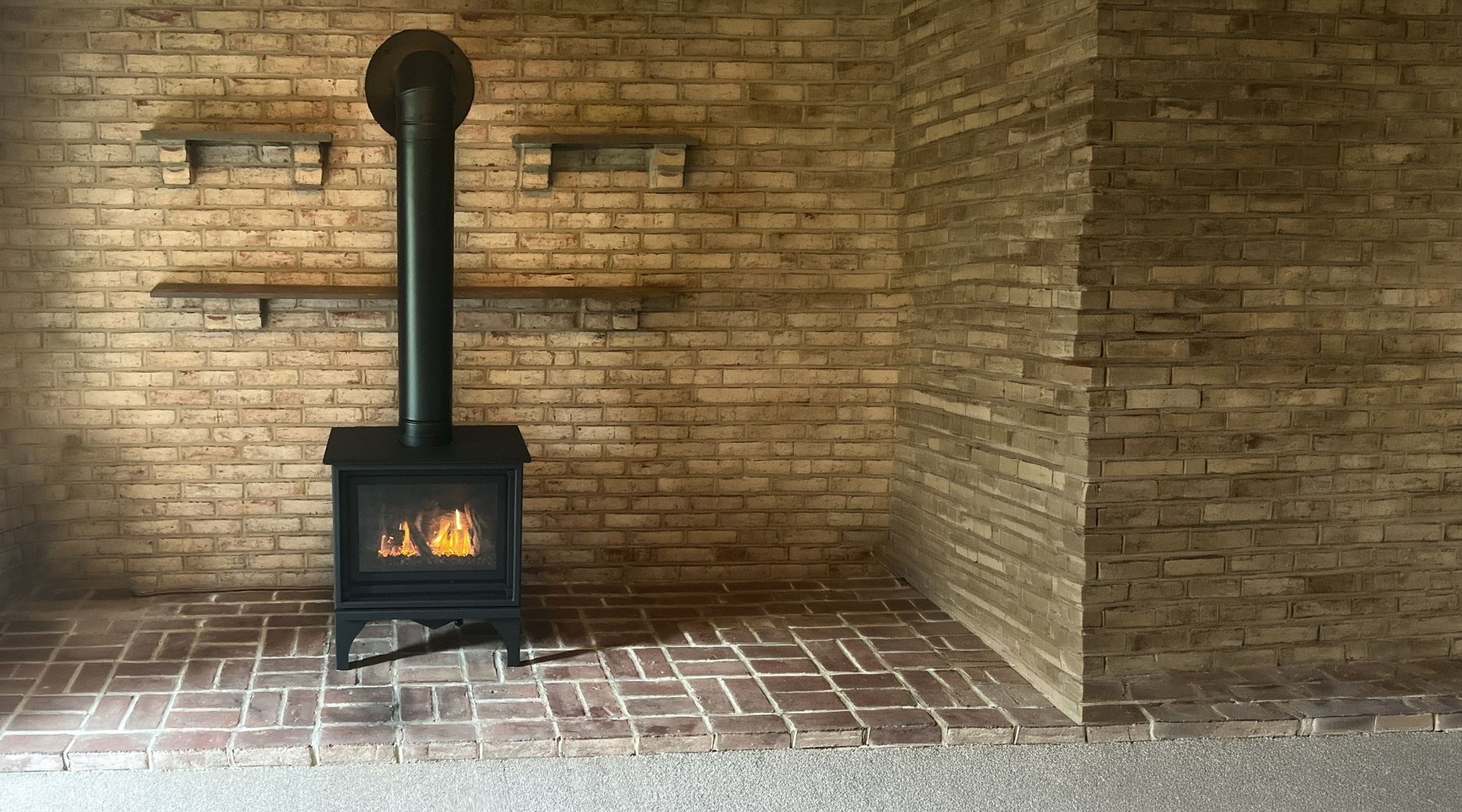
Stove pipe & venting
The right pipe for every stove, insert & fireplace.
Direct vent pipe, chimney liners, insulated chimney pipe, and stove pipe from Selkirk, BDM, and AmeriVent — the venting we install behind every appliance we sell, with common sizes in stock in Ephrata.
Quick guide
Which venting does my appliance need?
Every appliance's installation manual lists the venting it's approved for — we follow it on every install.

Gas stoves & gas fireplaces
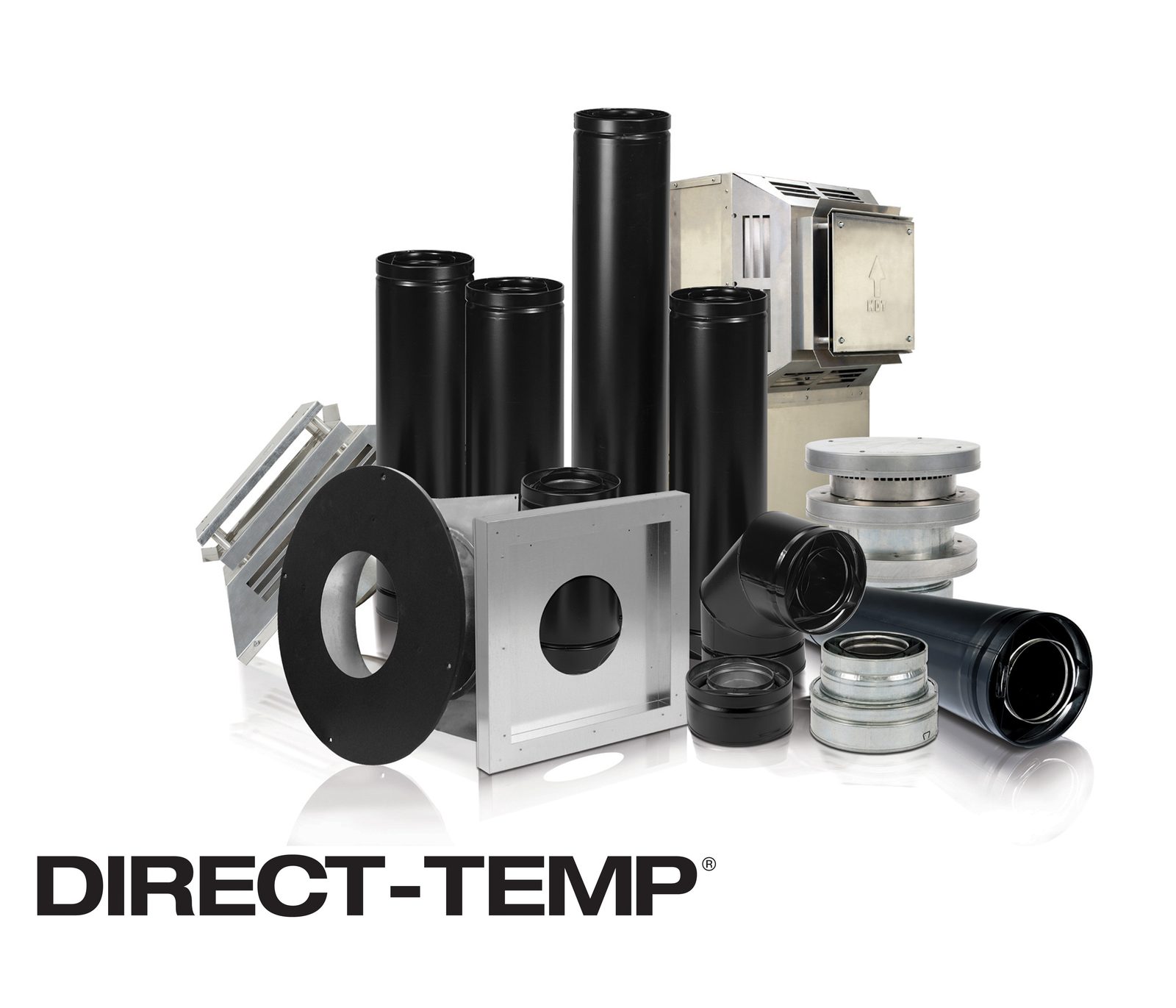
Selkirk Direct-Temp direct vent pipe
For direct vent gas stoves and gas fireplaces
A direct vent gas appliance breathes through a pipe-within-a-pipe: the inner pipe carries exhaust out while the outer one brings fresh combustion air in, so the fire never uses the air in your home. Direct-Temp is Selkirk's co-axial system for it, run straight up through the roof or out the side wall.
We stock both common sizes — 4" × 6⅝" and 5" × 8" — with elbows, adjustable lengths, wall thimbles, and vertical and horizontal caps, in galvanized or black.
- 304 stainless inner pipe with welded seams; galvanized or matte-black outer wall
- LockTab joints turn 360° and lock with a push — no sealant needed
- Listed by UL and Warnock Hersey/ITS for direct vent gas appliance systems

Gas inserts, gas stoves & wood inserts
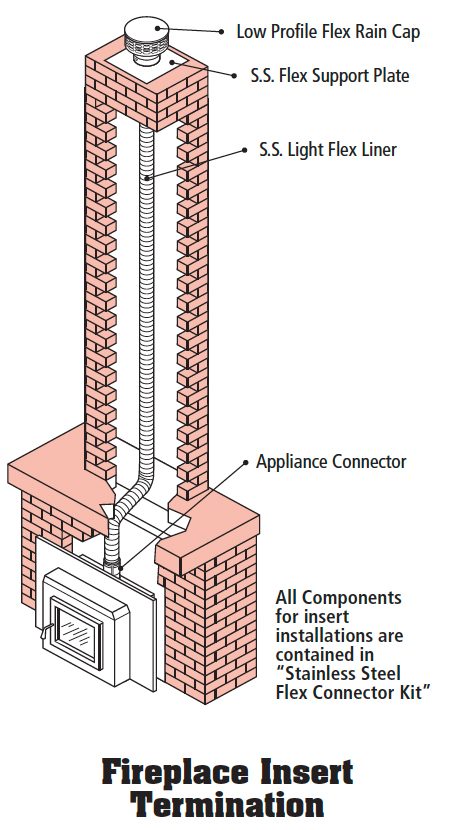
BDM flexible chimney liners
For inserts and stoves vented through a masonry chimney
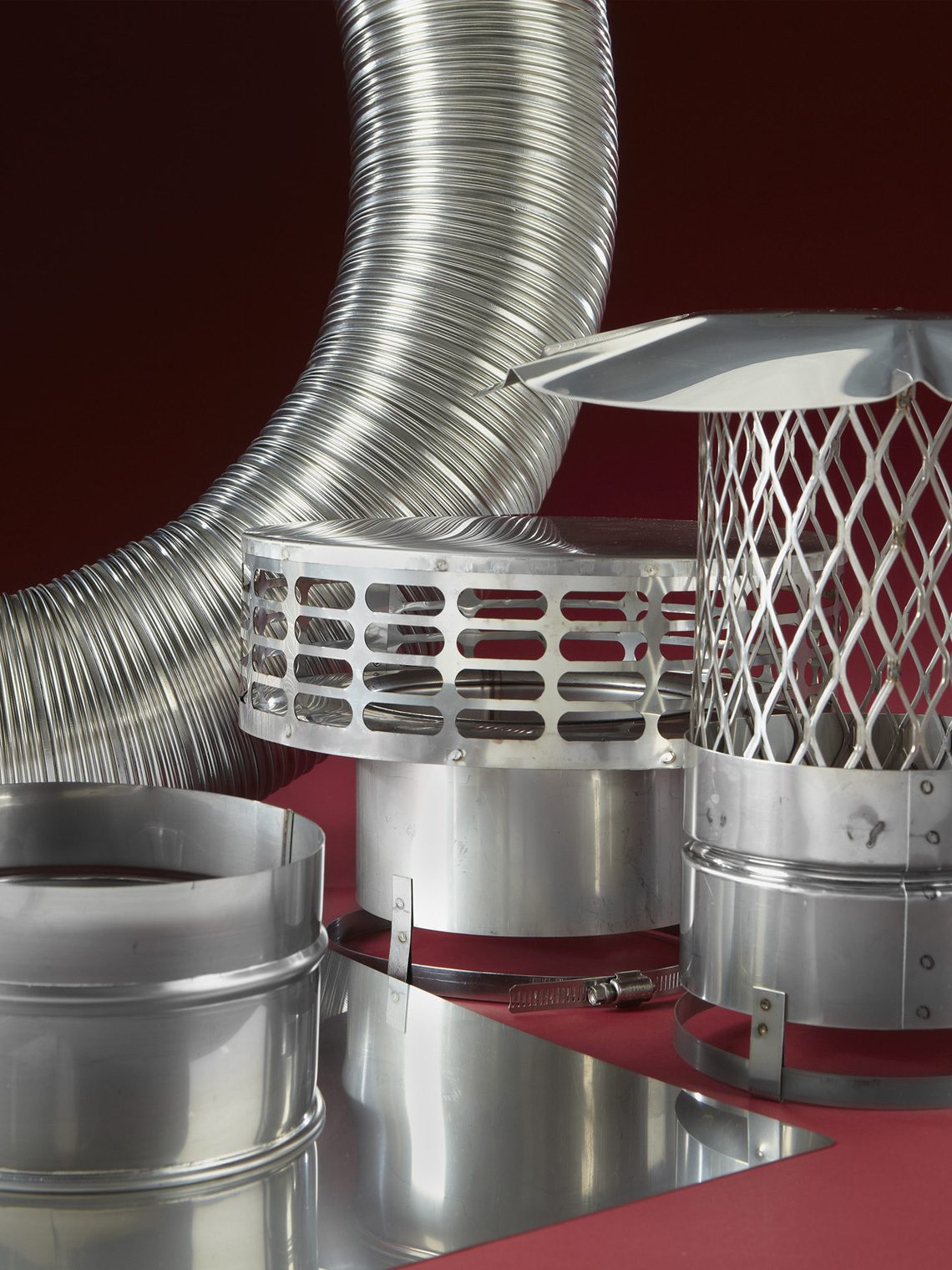
Most insert installs run a new flexible liner down the existing masonry chimney. Bernard Dalsin Manufacturing — family-owned in Farmington, Minnesota, since 1944 — makes the liners we use.
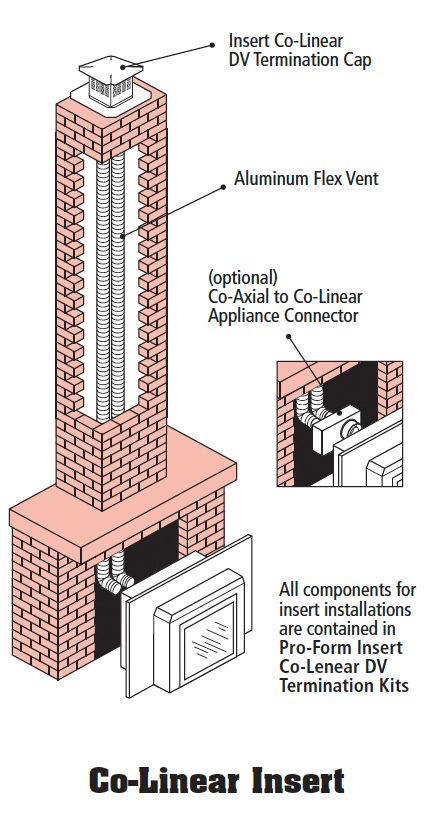
Gas inserts get two aluminum liners (co-linear): one for exhaust, one for fresh air, topped with a co-linear cap. To vent a gas stove into a masonry chimney, we use BDM's masonry chimney conversion kit with a 4" aluminum liner. Wood stoves and inserts get a stainless steel liner, and it is always insulated — most often a pre-insulated liner with insulation sealed between two stainless walls, or a single-wall liner wrapped in an insulation blanket. Oval liners fit tight clay-tile flues.
- Stainless: "Dalsin Line" 316L flex liner, UL/ULC 1777 listed — for wood, pellet, gas, oil & coal
- Stainless flex is covered by a limited lifetime warranty
- Gas: co-linear caps in 3" × 3", 3" × 4" & 4" × 4"; aluminum flex listed to UL 1777 and ANSI Z21.88/CSA 2.33
- Gas stoves into a masonry chimney: masonry conversion kit + 4" aluminum liner
- Stainless liners for wood are always insulated: pre-insulated double-wall, or wrapped
- We stock 3" and 4" aluminum and 6" pre-insulated stainless liners

Wood stoves & wood fireplaces
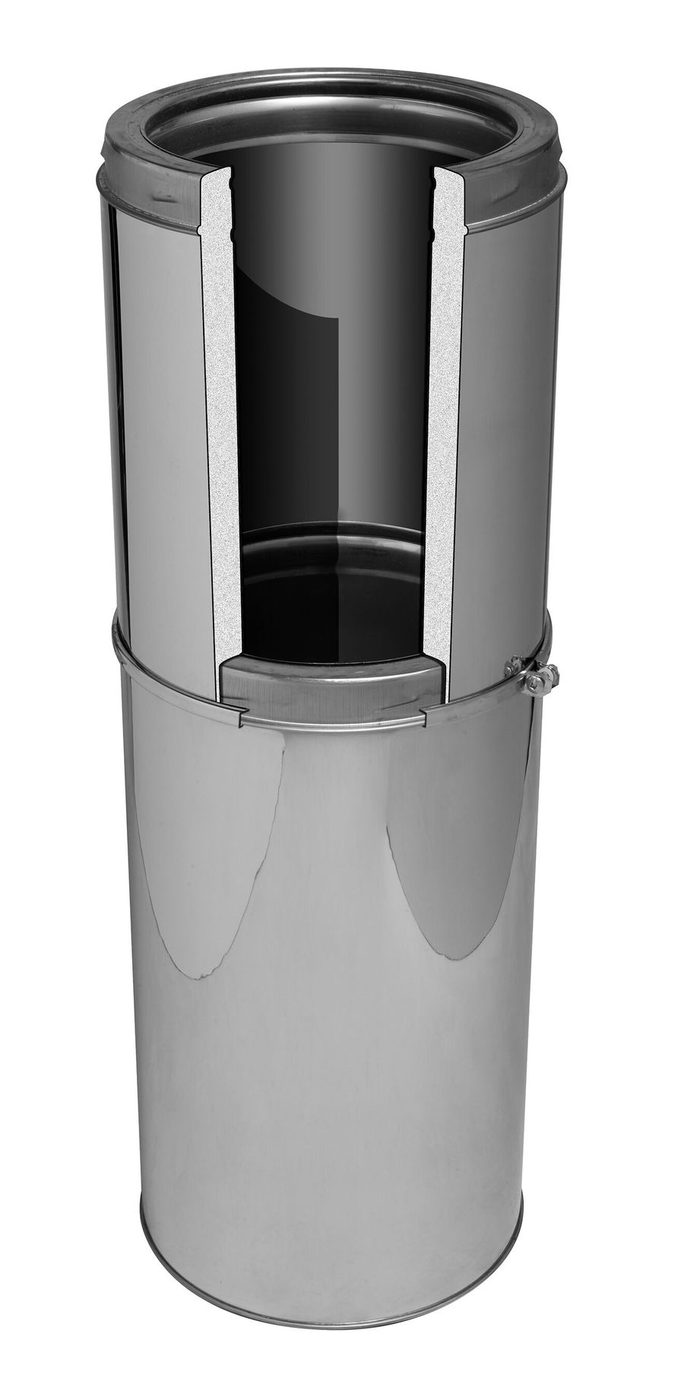
AmeriVent TLC insulated chimney pipe
The chimney for a wood stove with no masonry chimney
When there's no masonry chimney to use, a wood stove needs a listed factory-built chimney from the ceiling up through the roof. AmeriVent Model TLC is the all-fuel chimney we install: insulated, double-wall stainless steel that stays cool enough outside to run with just 2" of clearance.
We stock 6" and 8" TLC with ceiling and cathedral supports, attic insulation shields, flashings, and caps.
- 304 stainless inner liner and outer casing with 1" of packed mineral-wool insulation
- Listed to UL 103 HT — 2100°F creosote burn-out rating (5"–8")
- 2" clearance to combustibles; fits between 16"-on-center framing
- Twist-lock sections with locking bands on every joint
- Limited lifetime warranty for the original owner
Wood stoves
Selkirk Ultimate StovePipe
Double-wall black pipe from the stove to the ceiling or chimney
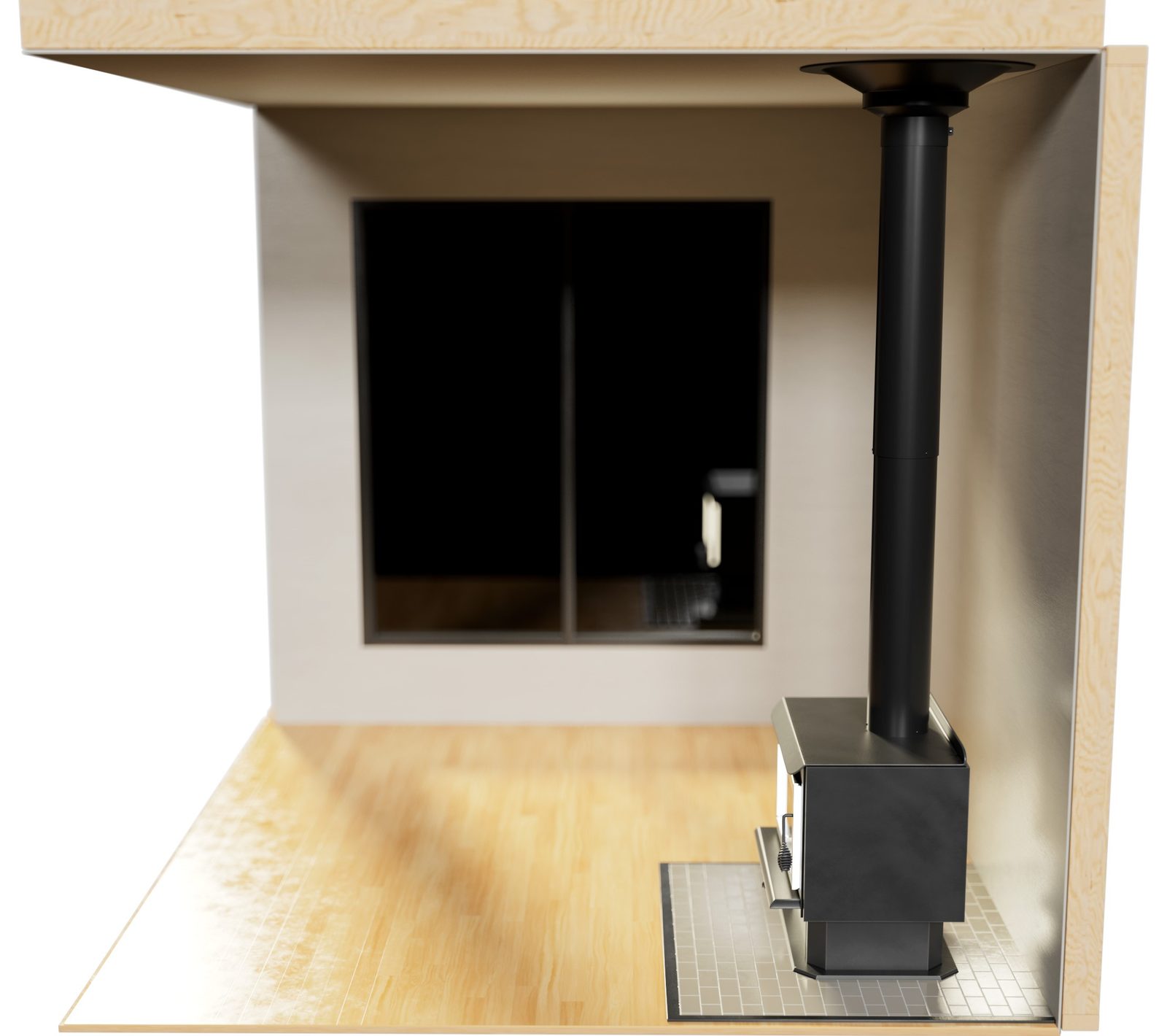
Stove pipe is the visible run from the top of your stove to the ceiling support or chimney thimble. Selkirk's Ultimate StovePipe is double-wall: an air gap between the walls lets it sit just 6" from combustibles, where ordinary single-wall pipe typically needs 18".
We stock 6" pipe, elbows, adjustable lengths, and stove adapters in a scratch-resistant metallic black finish.
- 430 stainless inner liner and satin-coat steel outer jacket, welded seams
- 6" clearance to combustibles on walls and ceilings
- Drip-free design keeps creosote inside the pipe
- Certified to CAN/ULC-S641 and the temperature requirements of UL 103 HT
From our crew
Venting we've installed
Good questions
Venting FAQ
- What kind of venting does my stove or fireplace need?
- It depends on the fuel and the appliance's listing. Direct vent gas stoves and fireplaces use co-axial direct vent pipe like Selkirk Direct-Temp — or, to use an existing masonry chimney, a conversion kit and a 4-inch aluminum liner. Inserts are vented through a liner run down a masonry chimney — two aluminum liners for gas, an insulated stainless liner for wood. Wood stoves use double-wall stove pipe to the ceiling or chimney, then either an insulated stainless liner in a masonry chimney or insulated chimney pipe like AmeriVent TLC. The appliance's installation manual always has the final say.
- Do I need a chimney liner for a fireplace insert?
- Inserts are vented with a liner that runs the full height of the chimney. Gas inserts use a co-linear pair of aluminum liners (one for exhaust, one for combustion air); wood stoves and inserts use a stainless steel liner that is always insulated — usually a pre-insulated liner with insulation between two stainless walls, or a liner wrapped in an insulation blanket. We size the liner to the insert and your flue when we look at your chimney.
- What's the difference between single-wall and double-wall stove pipe?
- Single-wall pipe typically needs 18 inches of clearance to combustible walls and ceilings. Double-wall pipe like Selkirk Ultimate StovePipe has an air space between two walls, which lets it sit 6 inches from combustibles.
- Does Bowman's install chimney liners and venting?
- Yes. Our crew installs the venting with every stove, insert, and fireplace we sell, and we keep the common sizes of Selkirk, BDM, and AmeriVent pipe in stock at our Ephrata, PA store. We install within about an hour of Ephrata — the Lancaster, Reading, Lebanon, and York areas.
Not sure what you need?
Bring your model number — we'll match the pipe
Stop by our Ephrata store with your appliance's model number and a photo of your chimney or where the pipe will run. We'll tell you exactly which parts you need — or schedule our crew to install it.